When Creative Tools Die
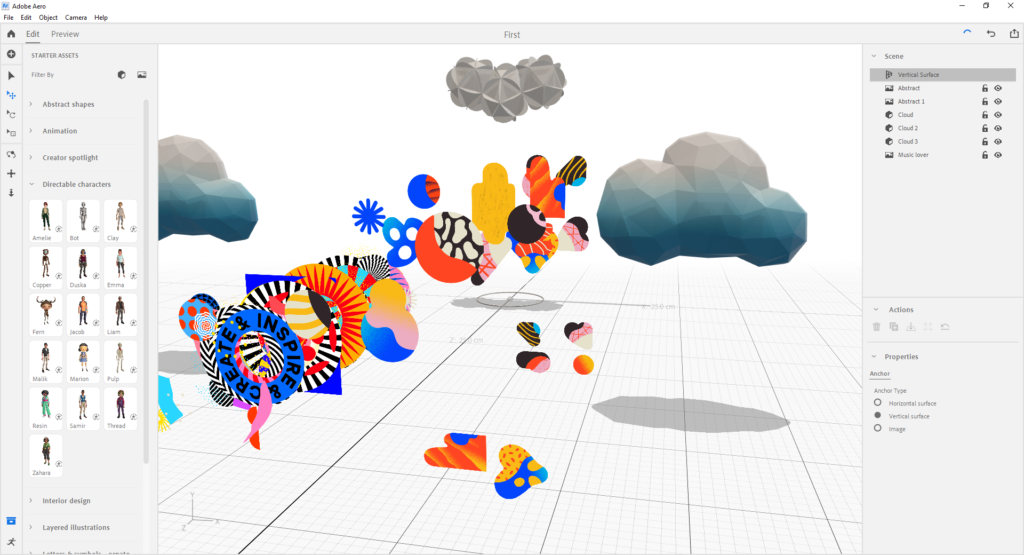
The news that Adobe will be shutting down Aero later this year is bittersweet. Launched in 2019, Aero was early to the AR creation space. It offered a rare bridge between the tools many of us already used, Illustrator, Photoshop, Substance and the world of interactive, spatial design. For creatives who did not want to dive headfirst into a game engine, Aero felt like a doorway into something bigger.
But Aero never truly left beta. It received updates, but it did not evolve into the robust, stable platform many of us hoped it would become. For those of us who taught with it, experimented with it, and integrated it into client work, it was a companion we learned to work around, knowing its quirks but appreciating its accessibility.
In my own teaching, Aero allowed students to quickly bring layered assets into augmented reality, making ideas tangible without the steep technical barrier that so many AR platforms present. One of my own projects, Stories from the Creek, used Aero to place audio stories into the landscape, turning a physical walk into a layered, spatial experience. It is hard to imagine creating that particular work in quite the same way with other tools.
The reality is that XR has grown rapidly, but Aero stood still. Other platforms emerged, evolved, and found their audiences. Aero, for all its promise, stayed in beta until the very end. And now, its chapter is closing.
I have seen this before. The most recent example that comes to mind is Adobe Muse, a web design tool that gave non-technical creatives, my art and design students included a way to publish work online without wrestling with WordPress or writing code. Like Aero, Muse was approachable, visual, and creatively liberating. And like Aero, it was eventually declared end of life, leaving a community of users scrambling for alternatives.
These moments raise a harder question: what does it mean to “trust” the companies that make our creative tools? We buy into their ecosystems, invest hours learning their workflows, and even design entire courses or client projects around them. That trust can feel mutual when the tools grow alongside our needs. But when priorities shift, market share stalls, or internal resources are pulled elsewhere, that trust can be abruptly broken. The reality is that these tools are not promises, they are products, and products can be discontinued.
Aero’s story is also a reminder of what it means to build work on beta software. In its early days, the “beta” label felt more like a formality, a way for Adobe to signal that Aero was still evolving. Many of us assumed it was a stepping stone to a full release, not a sign that its future was uncertain. But beta status is, by definition, a disclaimer. It means the tool could change dramatically, lose features, or disappear altogether.
For those who invested time, energy, and creative thinking into Aero, its shutdown is more than an inconvenience. It means projects need to be rethought, workflows retooled, and in some cases, work archived without a path to future updates. My Stories from the Creek AR experience still exists, but the original delivery method will vanish when Aero does.
This is not unique to Adobe. The creative technology space moves quickly, and even large companies retire products if adoption is low or strategy shifts. For educators, artists, and designers, that means balancing the excitement of early tools with the need for longevity, choosing platforms with strong roadmaps, clear support, and export options that allow work to live beyond the lifespan of any single app.
Still, this is not the end for design-driven AR. Tools like Reality Composer Pro (for Apple devices), Vectary (browser-based 3D/AR with instant WebAR publishing), ZapWorks Designer (cross-platform, template-driven), and 8thWall (for those ready to work in WebAR with more technical depth) are all strong options. They differ in complexity, audience reach, and creative control, but each keeps alive the spirit of what Aero offered: a way for creatives to step into AR without giving up the craft and detail that define their work.
To my students and colleagues, my advice is simple: explore new tools with curiosity, but choose your core platforms with care. Look for signs of active development, a clear public roadmap, and an engaged user community. Prioritize formats and export options that allow your work to outlive any single piece of software. Most importantly, keep your creative ideas at the center, so that even if a tool disappears, the vision behind your work will always find another way to be realized.